
Your Customers Are Everywhere. Is Your Marketing?
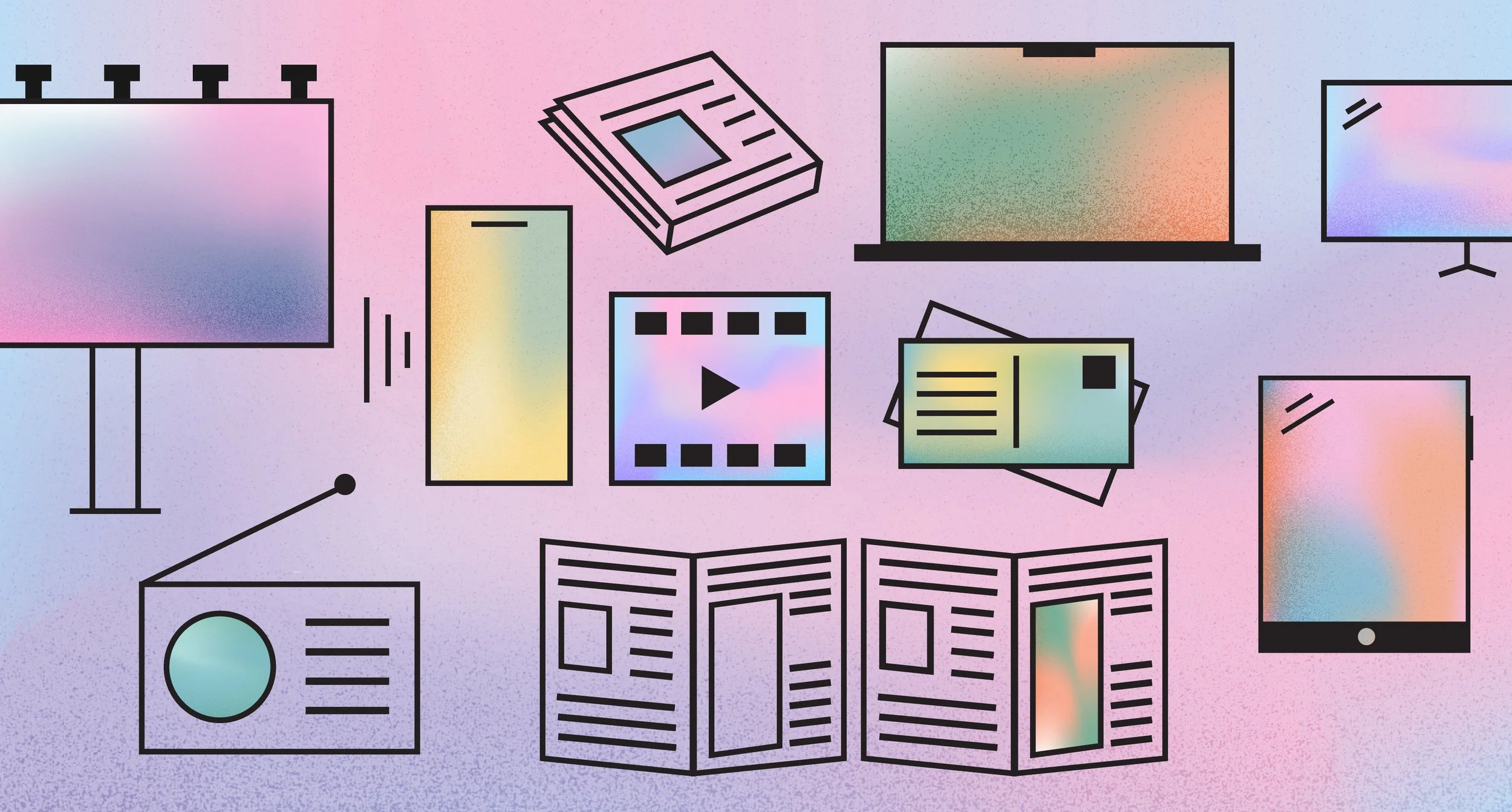
Before you’ve even hit 10am, you’ve probably checked your phone in bed, listened to the radio on your commute, scrolled social media over coffee, and passed a billboard on the way to a meeting.
Your customers are moving through that same nonstop mix of digital and traditional touchpoints every day. To your customer, there's no difference between your radio spot and your social ad, it's all just you. They don’t experience channels in silos, so your media shouldn’t be planned that way.
Stop Fighting Yesterday's War
For years, digital agencies said traditional was dead. Traditional media reps said digital was overhyped and full of bots. Everyone wanted your budget.
But your customers never picked a side. They never decided to pay attention only to digital ads or to notice only traditional media. They live in both worlds, moving between them seamlessly throughout their day.
The smartest brands today have stopped fighting about digital vs. traditional. They've started asking: "What combination will reach our audience most effectively?" Sometimes that's heavily digital. Sometimes it includes traditional. It depends on your audience, your goals and your budget.
Why Multi-Channel Actually Works
The brands we see getting the strongest results aren't necessarily the ones with the biggest budgets or the flashiest campaigns. They're the ones that show up consistently across multiple platforms where their audience spends time.
People don't decide to buy from you because of one perfect ad at one perfect moment. They convert because they've seen you on social media, heard you on a podcast, and found you at the top of a search result. Over time, that repetition across different platforms builds the familiarity and trust that actually drives customer action.
It could be a mix of print, connected tv, display, digital audio, cinema, and transit … or any combination of these. The point isn't to be everywhere. It's to be in enough of the right places, with a consistent message. That way, you become familiar, credible, and top-of-mind.
The evidence is consistent across the industry: multi-channel campaigns consistently outperform single-channel ones. Higher brand recall, stronger conversion rates, better ROI. Not because any individual channel is magic, but because the whole is greater than the sum of its parts.
A radio spot alone has limited impact. A social campaign alone has limited impact. Both working together? They reinforce each other and multiply the results.
How We Build Your Strategy
We don't start by asking "Should we do TV or digital?" We start with the 3 W’s:
Who is your target audience? A campaign targeting parents requires a different channel mix than one targeting retirees. We look at media consumption patterns, not just demographics. If your audience listens to podcasts during their commute or watches the local news every evening, we need to be there.
What are you trying to achieve? Are you looking to build awareness, drive foot traffic or generate leads? Different goals require different strategies and different channel combinations.
What's your budget? A $10,000 budget requires a different approach than a $100,000 budget. We work with what you have to stretch every dollar and maximize its impact.
Then we build a media mix that creates multiple touchpoints across the channels that make sense for your audience and your budget. Sometimes that includes traditional media like radio or out-of-home. Or it could be a strategic mix of digital channels, such as social and digital video. The individual channels matter less than the strategy behind the mix.
Attribution Obsession
Does it really matter which channel gets the credit? It's a fair question, and one we hear often, especially from clients who are used to managing digital and traditional budgets separately. When every dollar has to justify itself, it's natural to want a clear answer about which ad drove the sale.
However, the way customers actually make decisions doesn't work that way. Someone might see your billboard on Monday, hear your radio spot on Wednesday, and then search for you on Friday before finally clicking a social ad and converting. Which channel gets the credit? The last one, if you're using standard tracking. But remove any of the earlier touchpoints, and that sale might never have happened.
Instead of obsessing over attribution, we focus on what actually matters: campaign performance. Consider the campaign as a whole and stop making every channel prove itself in isolation. Look at overall lead volume, brand search lift, foot traffic trends, and revenue during campaign periods.
These broader indicators tell you far more about whether your media mix is working than arguing over which channel deserves the credit. One channel got the last click, but the media mix drove the sale.
Every Brand's Mix Is Different
There's no universal formula. Your ideal channel mix depends on your audience, your goals, your budget and your competitive landscape.
Maybe it's 100% digital. Maybe it includes traditional media. Maybe it shifts seasonally. What matters is building a strategy that creates enough touchpoints to actually move the needle you need it to.
Digital and traditional aren't enemies. They're teammates with different strengths and shared goals. When they're planned together and not funded or strategized in isolation, they create a campaign that feels cohesive everywhere your customers are. And that consistency is what drives real results.
Ready to make sure your marketing is everywhere your customers are? We'd love to help. Reach out and let's build a mix that works for you.